Overview:
PwC, one of the world's leading professional services networks, partnered with Authentic8 to bring transparency and trust to global seafood supply chains. Using Bluefin Tuna as the pilot species, the initiative traces every catch from the fisherman's vessel to the port and beyond, giving buyers and consumers verifiable proof of origin, sustainability, and authenticity through a blockchain-backed mobile experience.
The pilot focused on Bluefin Tuna deliberately: it is one of the most heavily regulated and most frequently mislabeled species in the global seafood trade, which made it the toughest possible proving ground for the model before extending it to other at-risk species PwC's clients bring to market.
The solution combines on-the-water data capture, smart contracts, and a consumer-facing scanning app to turn a traditionally opaque supply chain into a fully auditable, end-to-end journey.
Challenge:
Seafood supply chains are notoriously opaque and vulnerable to fraud. Endangered and heavily regulated species like Bluefin Tuna are often mislabeled, illegally caught, or laundered through paper-based records that are easy to falsify and impossible to verify in real time. PwC needed a way to give retailers, regulators, and consumers confidence in the legality and origin of every catch, without slowing down a fast-moving catch-to-port supply chain.
The risk was never hypothetical for the fisheries and processors PwC works with. A shipment flagged as improperly documented can be held at port for days, a retailer caught selling mislabeled fish faces reputational damage it can't easily undo, and regulators investigating illegal fishing have historically had little more than paper logs to work from. Digitizing the chain of custody meant the difference between a catch that could defend itself and one that couldn't.
Solution:
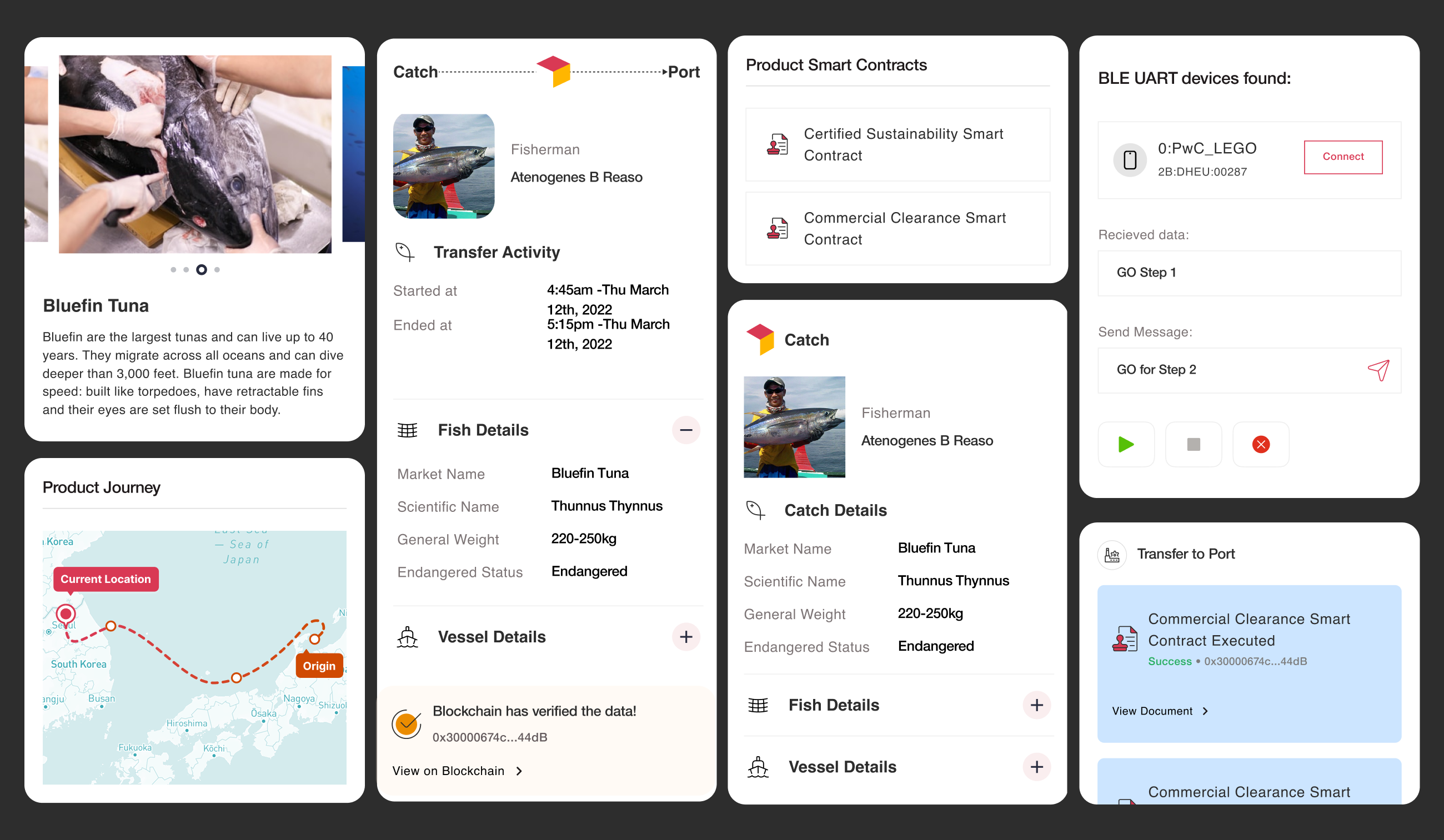
Authentic8 built PwC a blockchain-based seafood traceability platform that begins the moment a fish is landed. Catch details — fisherman identity, vessel information, catch location, species, weight, and endangered status — are logged onto an immutable blockchain ledger, with field teams using BLE-enabled devices to capture and transmit data directly from the vessel.
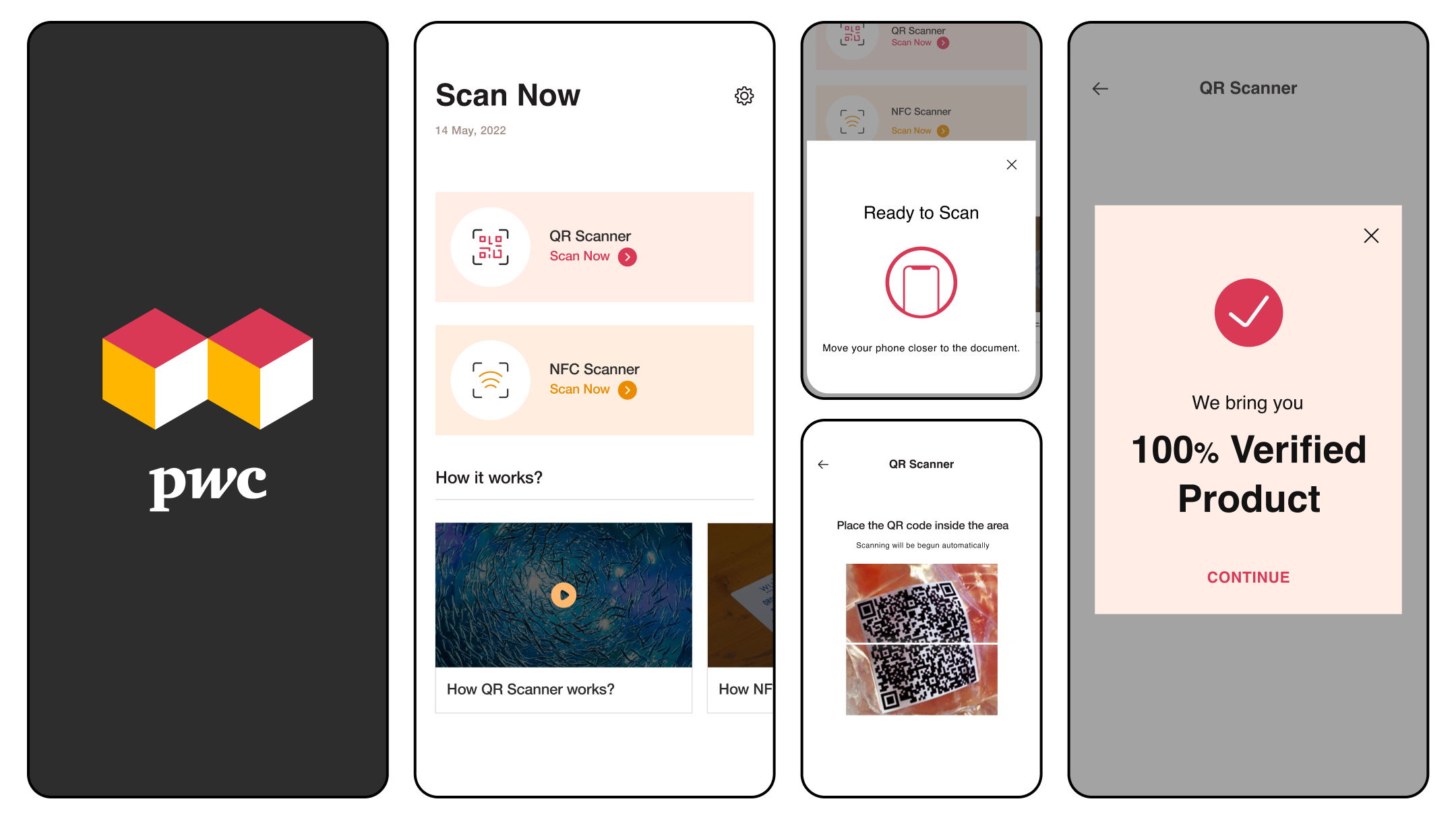
As the product moves from catch to port to market, smart contracts such as the Certified Sustainability Contract and Commercial Clearance Contract execute automatically, recording every transfer with a timestamp and an on-chain transaction ID. Buyers and consumers simply scan the QR code or NFC tag on the packaging through the PwC app to view the product's full journey, including an interactive map of its route from origin to current location, complete transfer activity, and a "Blockchain has verified the data" confirmation.
The result for the end customer is immediate and reassuring: a 100% Verified Product confirmation, backed by a permanent, tamper-proof record.
Results:
The pilot turned Bluefin Tuna's journey from ocean to plate into something that could be checked, not just claimed:
- Each catch is logged to the blockchain within hours of landing, tagged with fisherman, vessel, and location data captured via BLE devices at the point of catch.
- Buyers scanning a QR code or NFC tag at any point in the supply chain see the same verified record, with no separate paper trail to reconcile against it.
- Certified Sustainability and Commercial Clearance smart contracts execute automatically as the product changes hands, timestamping every transfer on-chain.
- Retailers and regulators can trace a single catch back to the vessel that landed it in the time it takes to open an app.
Impact:
This solution gives PwC's seafood partners an auditable, tamper-proof record of every catch, helping combat illegal, unreported, and unregulated (IUU) fishing while giving consumers real confidence that the fish on their plate is exactly what it claims to be. By digitizing the chain of custody from vessel to shelf, PwC and Authentic8 have set a new standard for transparency and sustainability in the seafood industry.
It also shifts sustainability and legality claims that used to live in spreadsheets and paper certificates into something a buyer can verify themselves in seconds. As pressure from regulators and conscious consumers keeps building, that kind of provenance, impossible to falsify wholesale, is quickly becoming the baseline retailers and importers expect from their seafood suppliers.